|
Possible
Solutions for Homework 3 K
Foster, Economics of Environment, Eco B9526, CCNY Spring
2011 |
|
|
1.
Carefully explain an example of
an environmental problem affecting New York and explain the Coase-type
solution. What might Ostrom
add to this? Which version of the
explanation seems more compelling to you?
Answers will vary.
2.
Consider two firms situated near
to each other: a brewery (which needs clean water) and a tannery (which expels
dirty water). The tannery currently
emits 50 units/day of chemicals into the water.
Its marginal costs of reducing these emissions, where reductions of emissions are q, is
8q. The brewery's marginal costs of
cleaning the chemicals out of the water before using the water are proportional
to twice the level of the pollutant.
- In the absence of regulation or negotiation, what level of
emissions would the tannery emit?
What would be the marginal costs to the brewery to clean the water
again?
With neither regulation nor negotiation, the tannery would emit 50 units/day of chemical pollutants, so incurring zero marginal cost of cleanup. The brewery would have MC=100 for cleaning all of this.
- What amount of emissions would be chosen if both firms were owned
by a single company (or would be chosen by a social planner)?
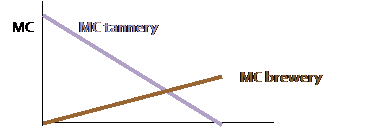
The MC of the tannery are 8q; the MC of the brewery are 2(50 – q). These are equal at q*=10, or pollution emissions of 40, which would be the social optimum. At this level both firms have MC=80.
0 10 20
30 40
50 units of pollution 50 40 30
20 10 0 units of q (reduction)
- What would the Coase Theorem suggest
could be an expected outcome? How
much would the brewery be willing to pay to lobby for a law requiring
clean water? How much would the
tannery be willing to pay to lobby for a law allowing unlimited
emissions?
The Coase Theorem suggests that, if laws allowed unlimited pollution emissions, then the Brewery would be willing to pay the Tannery a price like 80 for ten units of emission reductions, so 800 in total. If laws allowed the Brewery to sue for damages to recoup the costs of cleanup, then the Tannery would pay the Brewery a price like 80 to allow 40 units of emissions, so 3200. If the law were in flux and considered by the legislature, then the Brewery would lobby for mandated cleanup and the Tannery for lax pollution regulation and would be willing to pay the present discounted value of these payments.